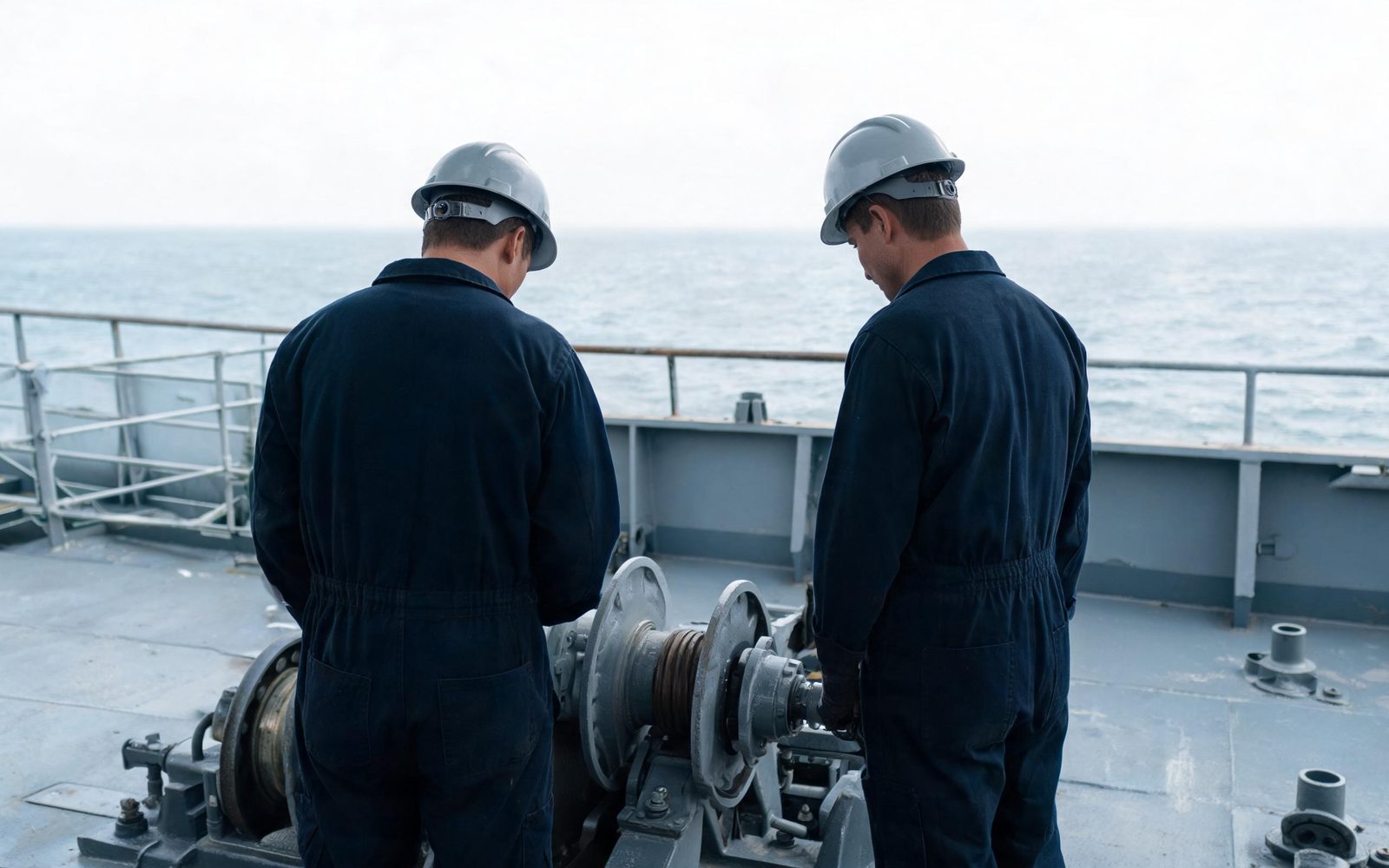
When a Pakistani officer joins a container ship owned in Europe and flagged in Asia, the wages that return home are recorded, if at all, as remittances. Economically, what has been exported is a service: the labour of a trained, certified professional, delivered on a foreign vessel.
That framing changes the policy question. The debate about Pakistan's seafarers is often conducted as though the goal were simply to send more people to sea. The more useful question is what level they are certified to, because the global market is short not of seafarers in general but of qualified officers in particular.
Why seafaring is best understood as a services export
A services export earns foreign currency through labour or expertise rather than goods. Seafaring fits exactly: the seafarer is trained at home, certified to an international standard, and employed aboard vessels that may have no other connection to the country. Earnings return as remittances and household spending.
The inputs are human rather than physical, which makes the economics attractive. An academy and a certification administration cost far less than a shipyard, and the product — a competent watchkeeper or engineer — is in demand under every flag in the world.
How certification is structured
The framework is the International Convention on Standards of Training, Certification and Watchkeeping for Seafarers, known as STCW. It sets the minimum standards seafarers must meet and that national administrations must verify and certify. Because it is international, a certificate from a compliant administration can be recognised by other states.
Layered above STCW is the Maritime Labour Convention 2006 of the International Labour Organization, which sets minimum standards for seafarers' living and working conditions. Together they define both the competence required and the terms of employment — and they make the national administration the gatekeeper of its seafarers' access to the international market.
The labour market: officers scarce, ratings in surplus
The market is not uniform, and conflating its two halves produces bad conclusions. The Seafarer Workforce Report 2026, by BIMCO and the International Chamber of Shipping, estimates a global shortfall of 39,100 STCW-certified officers in 2026 and a surplus of 56,890 ratings. The officer gap is projected to exceed 100,000 by 2030.
Read together, the figures are specific. There are more than enough people seeking entry-level positions, and not enough qualified to take responsibility — the officers who stand watches, hold technical authority and carry legal accountability on board.
Reading the shortfall correctly
A headline number invites an obvious but mistaken response: train more officers as fast as possible. The shortfall is measured against a certification standard, not a general demand for workers, so filling it requires people who meet STCW requirements and hold certificates an administration can get recognised abroad.
Analysis: the opportunity for a supplier country lies in the certified-officer segment, not in ratings, where the world already has more applicants than places. A global gap also coexists with pockets of surplus in particular specialisations, so training investment should follow the segment rather than the headline.
Employment pathways and the crewing question
Seafarers do not apply to shipowners directly. Employment is intermediated by manning agencies, crewing managers and ship managers. That structure is efficient but introduces the weaker links: recruitment fees, inconsistent contract terms, and the risk that a seafarer's certification is devalued by an agency they never chose.
For a country building a services export, the reputation of that layer matters as much as the quality of its academies. A flag state or owner deciding where to recruit is assessing risk as well as skill, so predictable, well-regulated crewing is itself a selling point.
Remittances, and the limits of the headline benefit
Remittances are the visible return, and they matter: foreign currency, spent domestically, supporting households that would otherwise have fewer options. In balance-of-payments terms they are a genuine export earning.
Analysis: they are also easy to overstate as a development strategy. They are hard to measure, because not all earnings move through formal channels, and they depend on external demand rather than on a domestic industry that can be expanded at will. Treat them as revenue, not purpose.
The binding constraint is skill level, not seafarer numbers
The strategic priority is therefore not to send more Pakistanis to sea but to raise the proportion who qualify as officers, and to make the national certification system a mark of quality recognised abroad. Three implications follow:
- Measure training institutions by certification and employment outcomes, not by intake numbers.
- Invest in the physical bottlenecks — simulators, sea-time placements and qualified instructors.
- Treat retention of certified officers as an economic objective, not merely a human-resources one.
- Strengthen oversight of manning agencies, because their conduct is priced into the nation's reputation.
Frequently asked questions
- What is STCW, and why does it matter to a Pakistani seafarer?
- STCW is the International Convention on Standards of Training, Certification and Watchkeeping for Seafarers. It sets minimum competence standards that national administrations certify, and because it is international, a certificate from a compliant administration can be recognised abroad.
- Is there really a global shortage of seafarers?
- Only in one half of the market. The Seafarer Workforce Report 2026 estimates a shortfall of 39,100 certified officers in 2026 and a surplus of 56,890 ratings, with the officer gap projected to exceed 100,000 by 2030.
- How significant are seafarer remittances for Pakistan?
- They are a genuine foreign-currency earning and support households directly, so the visible contribution is real. They are also hard to measure precisely and depend on demand abroad, which is why they are best seen as the revenue of a services export rather than a strategy in themselves.
- What should a seafarer expect from the recruitment process?
- Under the Maritime Labour Convention 2006, seafarers have protections on recruitment and placement, including limits on the fees they may be charged. Because crewing is intermediated by agencies, enforcement is part of what makes a national supply of seafarers credible.
Conclusion
Seafaring earns its place in a trade strategy because it converts training into foreign currency without requiring heavy physical capital. But the global market rewards a specific segment: certified officers, where supply lags demand, rather than ratings, where the world already has more applicants than berths.
For Pakistan, the consequence is that the priority is depth rather than volume. A certification system that is internationally trusted, training institutions judged on outcomes, and a crewing sector whose conduct does not undermine the country's reputation together determine whether the workforce exports expertise or merely labour.
The Pakistan Maritime Research Centre studies merchant navy and seafarer questions as part of its work on Pakistan's maritime interests, and supports institutions that need independent, evidence-based analysis. Organisations examining certification, crewing or the wider services-export case are welcome to approach PMRC for research collaboration.