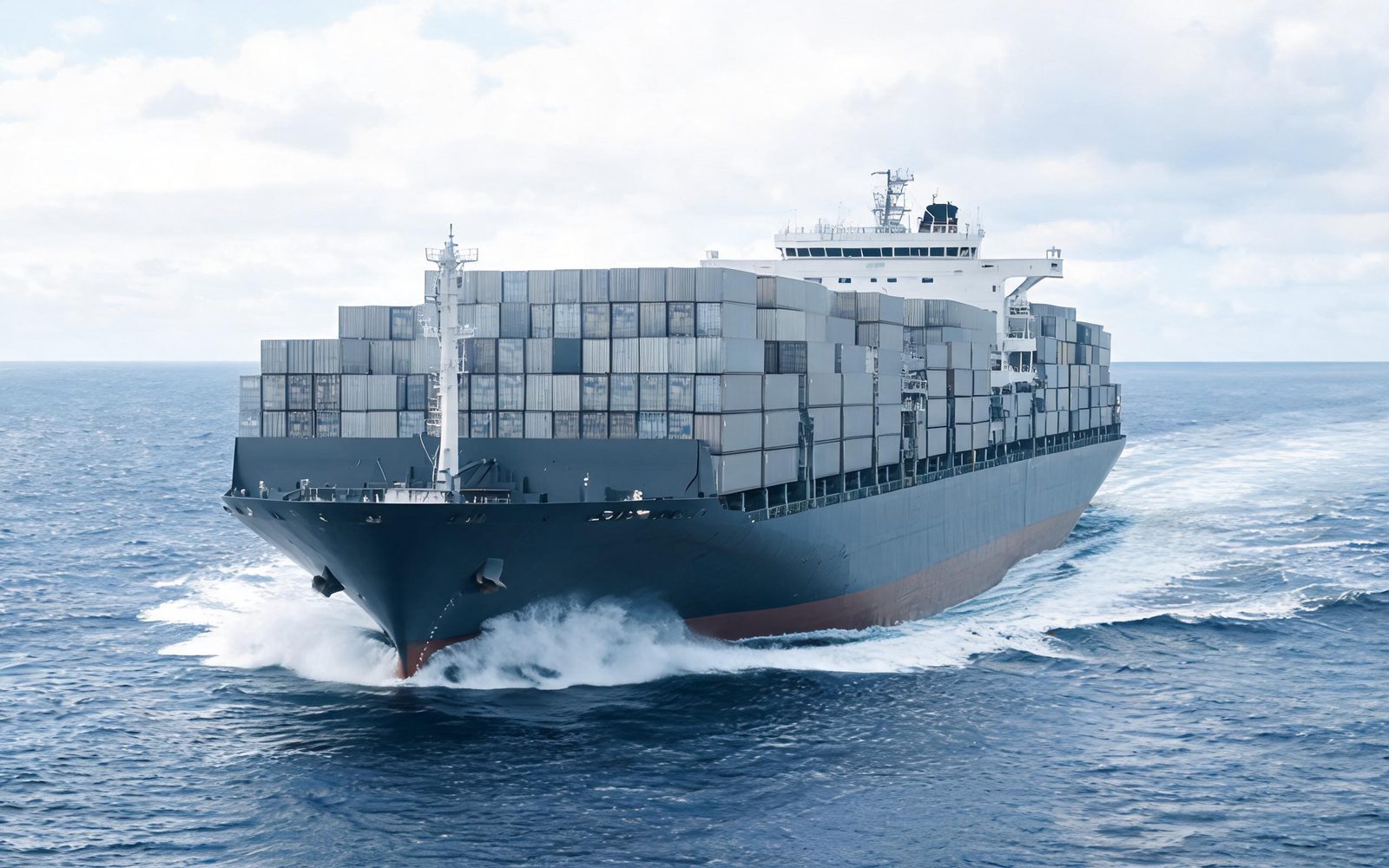
The North Arabian Sea is not one problem but a place where several pressures overlap. It carries the approaches to the Strait of Hormuz, the lanes that feed the ports of Pakistan and the wider Gulf, and a volume of energy and container traffic out of all proportion to its size.
The phrase "maritime security" is used loosely about it. Sometimes it means piracy, sometimes state-level confrontation, sometimes coastguard capacity. This article separates them, sets out the geography that shapes the risk, and identifies the capabilities that decide whether a threat is manageable or merely observed.
Where the sea sits, and why geography sets the terms
The North Arabian Sea lies between the coastlines of Pakistan, Iran, Oman and India, opening west through the Gulf of Oman towards the Strait of Hormuz and south into the wider Indian Ocean. Almost all seaborne trade between the Gulf and South Asia passes through or near it.
Three features follow for Pakistan: a long coastline running from the industrial approaches to Karachi and Port Qasim to the deep-water position at Gwadar; trade concentrated through few ports, so disruption near one is not easily absorbed; and shared water carrying fishing fleets and naval vessels alongside merchant shipping.
How sea lanes transmit exposure
A sea lane is better understood as a chain than as a route. Cargo moves through a sequence of ports, straits and insurers, and weakness at any link is felt along the whole. When a chokepoint becomes risky, the effect appears first in the cost of cover, then in routing decisions, then in schedules.
That matters for Pakistan because its imports are concentrated rather than diversified. Higher war-risk premiums or a delay at a strait raise the landed cost of everything the lane carries. The exposure is financial and logistical before it is military, which is why maritime security is not the navy's concern alone.
The threat picture: what recurs, and what is changing
Two categories dominate verified reporting. The first is piracy and armed robbery. The IMO has reported that incidents worldwide rose 17 per cent between 2024 and 2025, from 146 to 171 — a reminder that the problem did not end with the decline of large-scale Somali hijacking, but shifted and in places intensified.
The second is attacks tied to state-level or proxy confrontation. The IMO has verified 80 attacks on international shipping in and around the Strait of Hormuz since late February 2026, with at least 22 seafarers killed. These are deliberate, and their target is the confidence that keeps shipping moving.
Between the two sits a quieter category — interference with navigation, harassment of vessels, and the blurring of a commercial ship with a political target. This grey-zone activity is harder to count, and is best described rather than measured.
Proximity to the Strait of Hormuz is the defining variable
The Strait of Hormuz is the most consequential single feature in the regional picture: narrow, the outlet for a large share of global energy exports, and close enough that instability there is felt immediately rather than eventually.
For Pakistan, proximity cuts both ways. The country is a direct stakeholder in any disruption because its ports and shipping share the water, and it is exposed to second-order effects — higher insurance, rerouted traffic, fresh demands on naval capacity — even when its own vessels are not the target.
Maritime domain awareness: the quiet determinant
Capability here is less about firepower than about knowing. Maritime domain awareness builds a fused picture — from vessel tracking, patrol reporting, satellite imagery, port data and open sources — of what is moving where, and what is behaving abnormally. A threat seen early is often manageable; one discovered late rarely is.
The gap in many systems is not sensors but synthesis. Data sits with separate agencies and is not always joined into one operational picture in time to act. That connective layer is largely invisible, which is one reason it is under-resourced relative to its importance.
What the figures do and do not tell us
Incident counts are useful and limited at once. They rest on reporting, and reporting is uneven: owners weigh the cost of disclosure against its benefit, and smaller incidents, or those in areas with fewer reporting channels, are almost certainly under-represented.
Analysis: the reliable conclusion is that the risk environment in and around the North Arabian Sea has worsened and remains volatile. Precise magnitudes warrant caution, and policy responses should be built to function under uncertainty rather than assuming a stable baseline.
Where policy attention is best directed
The pattern across these priorities is that prevention is cheaper than response, and coordination cheaper than duplication:
- Invest in maritime domain awareness as a single fused picture rather than separate agency systems.
- Codify inter-agency coordination across navy, coastguard, ports and customs, so information moves as fast as the threat.
- Treat seafarer protection as a security objective, not a welfare afterthought — crews are exposed first.
- Pursue regional information-sharing through existing frameworks rather than new ad hoc arrangements.
Frequently asked questions
- Is maritime security in the North Arabian Sea mainly a piracy problem?
- No. Piracy and armed robbery are a real and growing category — the IMO recorded a 17 per cent rise in reported incidents worldwide between 2024 and 2025 — but they sit alongside deliberate attacks tied to regional confrontation, and the two call for different responses.
- Why does the Strait of Hormuz matter so much to Pakistan?
- Because of proximity and trade structure. It is a major energy chokepoint close to Pakistan's western approaches, and Pakistan's imports are concentrated rather than diversified, so disruption there raises costs that Pakistan pays even when its own vessels are not involved.
- What is maritime domain awareness, in plain terms?
- The ability to build an accurate, timely picture of what is happening at sea — which vessels are where, and which are behaving abnormally — by combining tracking data, patrol reporting, satellite imagery and open sources. It is the foundation of any effective response.
- How reliable are the incident statistics in this field?
- Directionally useful, but not exact. Reported figures depend on organisations choosing to report, and commercial incentives to stay quiet mean under-counting is likely. Definitions also vary between administrations, so read the numbers as trends rather than precise comparisons.
Conclusion
The North Arabian Sea concentrates risk because it concentrates traffic. Piracy, deliberate attacks and grey-zone interference are distinct problems that happen to share the same water, and each calls for a different response. What they have in common is that they are managed best through early awareness, sustained coordination and realistic planning assumptions.
The evidence supports a clear direction: invest in the unglamorous connective work of domain awareness and inter-agency coordination, protect seafarers as a matter of security rather than only welfare, and build for volatility rather than for a stable baseline that is unlikely to return.
The Pakistan Maritime Research Centre works on maritime security questions of this kind, producing independent analysis for institutions that need it. Organisations examining their exposure in this domain are welcome to approach PMRC, which supports institutions seeking independent research on Pakistan's maritime interests.